Applying the Pyramid Principle in practise at DycoTrade
How do you make complex professional documents easier to understand, scan and remember? That was the central theme of a Pyramid Principle training I recently delivered for DycoTrade.
The training was specifically tailored to the participants’ daily work. Rather than focusing on theory alone, we applied the Pyramid Principle directly to Functional Design Documents (FDDs) used within DycoTrade. The goal was to help participants structure these documents more logically and make their most important messages immediately clear to the reader.

About DycoTrade
DycoTrade is a Dutch software company specialising in Commodity Trading and Risk Management (CMTR) and ERP solutions for commodity trading business worldwide. Its software is built on Microsoft Dynamics 365 Finance & Supply Chain Management and helps companies manage the entire trading process.
“A very valuable training session”
The practical approach was well received. Following the training, Thavarani Pillay, Operations Manager at DycoTrade, shared the feedback from her team:
“Thank you for a valuable training session. My consultants all responded very positively. I look forward to seeing them put their new learnings in action.”
Start with what matters most
One of the main principles covered during the training is simple: do not make your reader wait for the most important message.
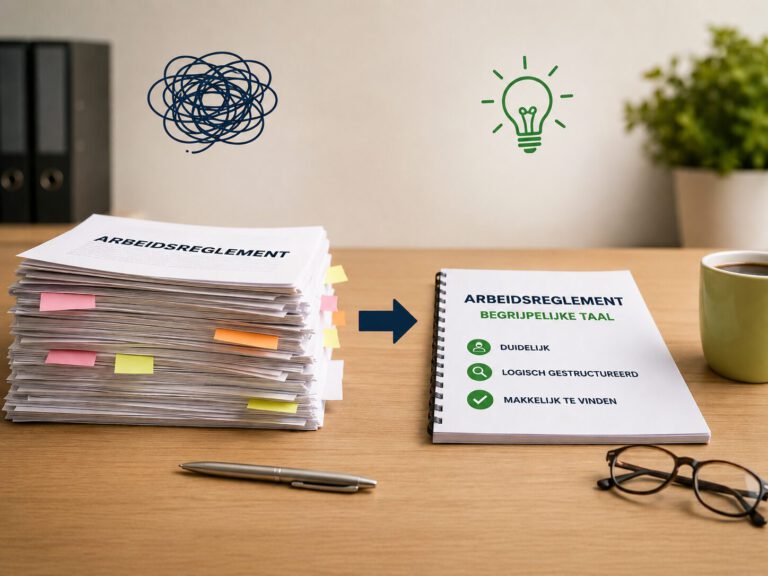
Traditional documents often start with background information, methodology and supporting details before eventually arriving at a conclusion or recommendation. The Pyramid Principle reverses that order. Start with the key message and then provide the arguments, evidence and details that support it.
This makes a document easier to scan and allows readers to quickly find the information they need.
Create a Question-Answer Dialogue
A second key concept is the Question-Answer Dialogue. Each message in a document should logically raise a question in the reader’s mind, which the next part of the document answers.
The SCQ structure (Situation, Complication and Question) helps establish this dialogue. It provides the context, identifies the complication and defines the question the document needs to answer. Together, SCQ and the Question-Answer Dialogue provide a logical foundation for the document.
Use streaming to make your structure visible
Finally, we focused on streaming: using titles, headings and subheadings to make the logic of a document immediately visible.
Good headings do more than divide a document into sections. Together, they tell a logical story. In a well-structured document, each heading can be seen as an answer to a question. A reader who only scans the headings should therefore already understand the main line of reasoning.
From theory to participants’ own documents
Throughout the DycoTrade training, participants applied these concepts themselves: comparing different structures, practising SCQ, improving streaming and ultimately restructuring an FDD according to the Pyramid Principle.
The underlying message is straightforward: put your reader first. Present the most important information first, anticipate the questions your reader will have and make the logic of your document visible. The result? Professional communication that is easier to understand and much more likely to be read and remembered.
Training both on-site and online
This training was provided by Westerhuis Training at the DycoTrade location in Aalsmeer. But the training is not only offered on-site. There is also a well-rated online version of the training. Want to know more? Get in touch with me or read the post (in Dutch): Training over het Pyramid Principle nu ook online.

Want to get better in writing?
Did this article inspire you? Are you looking for a good writing course or do you want help creating content? Let me know!